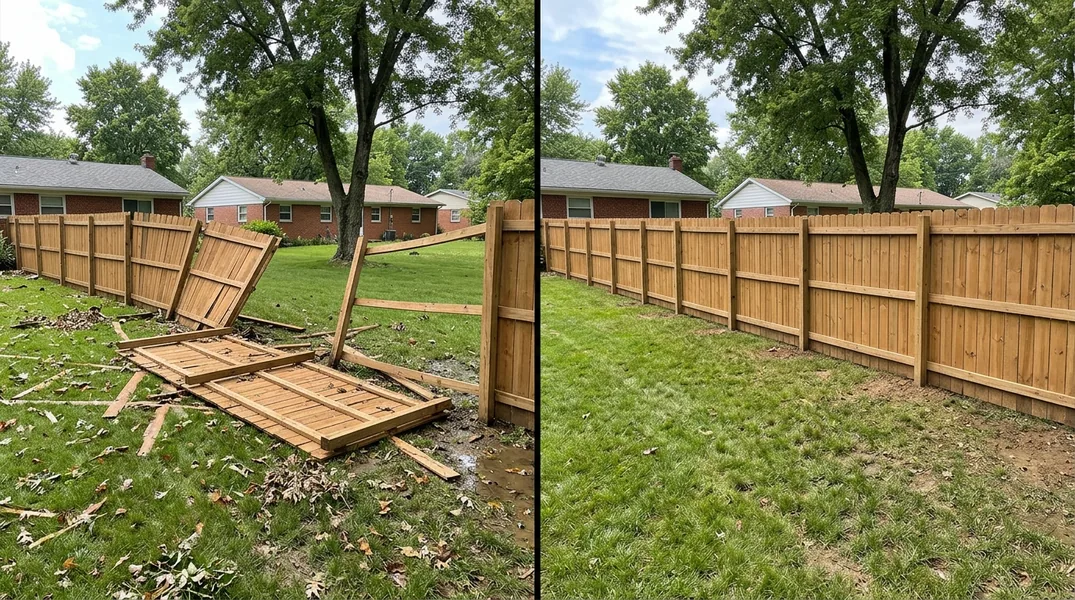
Why Columbus Winter Weather Destroys Fences
Every winter, Columbus homeowners face the same frustrating reality: their fences develop leaning posts, cracked boards, or complete sections that collapse under the weight of wet snow and relentless wind. This isn't random bad luck. It's the direct result of how Ohio's winter climate interacts with fence materials and poor installation practices.
Wet snow is significantly heavier than dry snow. When temperatures hover near freezing (which is common in Columbus from December through March), snow sticks to fence boards and accumulates in thick layers. A single cubic foot of wet snow can weigh 15 to 20 pounds, compared to just 5 to 10 pounds for dry snow. Add wind gusts that regularly exceed 30 mph, and your fence becomes a sail catching enormous lateral forces. Posts that were installed too shallow, in poor-quality concrete, or without proper bracing simply cannot handle this punishment.
The problem compounds when homeowners don't maintain their fences during fall. Leaves and debris clog the gaps between boards, trapping moisture against the wood. This moisture freezes and thaws repeatedly, expanding and contracting the wood fibers. Over several cycles, this freeze-thaw action weakens the structural integrity of the entire fence system. By the time spring arrives, the damage is already done.
How Wet Snow and Wind Load Damage Wood Fences
Wood & Privacy Fence Installation remains one of the most popular fencing choices in central Ohio, but wood is particularly vulnerable to winter damage when not properly treated and installed. The issue starts with how wood responds to moisture. Even pressure-treated lumber absorbs water, and when that water freezes, it expands. This expansion creates internal stress within the wood grain, leading to checking (small cracks) and eventually larger splits that compromise the board's strength.
Posts are where most failures occur. A fence post that's set only 24 inches deep in concrete will shift and loosen under repeated wind and snow load. Professional installers know that posts should be set at least one-third of their above-ground height into the ground, which typically means 30 to 36 inches for a standard 6-foot fence. The concrete should also be properly mixed, tamped, and allowed to cure fully before the fence bears any load. Many DIY installations and budget contractors cut corners here, using thin concrete mixes or failing to allow adequate curing time before winter arrives.
The lateral force from wet snow and wind doesn't just push on individual boards; it creates a racking effect that twists the entire fence structure. If the rails (horizontal supports) are undersized, poorly fastened, or installed without proper diagonal bracing in certain applications, the fence will rack, meaning the rectangular frame becomes a parallelogram. Once racking starts, it accelerates. The nails or screws holding boards to the rails begin to tear through the wood, creating loose sections that catch even more wind.
Pool Fence Installation and Winter Weather Challenges
Homeowners with pools face an additional layer of complexity when it comes to winter fence durability. Pool fence installation must meet specific code requirements, and those codes exist partly because pools create unique moisture environments. The constant humidity and splash-back from pool water accelerate wood decay and corrosion of metal components. During winter, this moisture freezes on fence surfaces, adding extra weight and creating ice buildup that increases wind load dramatically.
Pool fence code requirements in Ohio mandate minimum fence heights (typically 4 feet for residential pools) and specific spacing between boards to prevent small children from slipping through. A self closing pool gate must also function reliably year-round, which means hinges, latches, and the gate frame itself must be corrosion-resistant and properly maintained. Winter moisture and freeze-thaw cycles are especially hard on gate hardware. Rust develops on standard steel hinges, and wood gate frames warp and swell, preventing the gate from closing properly. This creates a safety hazard and means your pool fence is no longer compliant with pool fence code requirements.
The solution is to specify high-quality materials from the start. Stainless steel hinges and latches cost more upfront but won't corrode. Pressure-treated lumber rated for ground contact should be used for all posts. Some homeowners also choose Vinyl & PVC Fence Installation for pool areas because vinyl doesn't rot, requires no painting, and handles moisture better than wood. If you're installing a new pool fence or replacing an old one, this is the time to invest in materials and installation methods that will survive multiple Ohio winters without failure.
The Role of Improper Installation in Winter Fence Failure
Many fence failures that homeowners attribute to 'bad winter weather' are actually the result of shortcuts taken during installation. The cheapest fence contractor doesn't always provide the most durable fence. Common installation mistakes include setting posts in soil without concrete (a practice that should never happen), using single nails instead of screws (nails pull out; screws hold), mixing concrete to the wrong consistency, and failing to account for drainage around the fence line.
Water drainage is critical in Ohio's climate. If water pools around the base of fence posts, it will freeze and create a lens of ice that pushes the post upward and sideways, a process called frost heave. Properly installed fences have slight grading away from the posts to allow water to drain. Posts should never be set at ground level; they should be slightly elevated so water doesn't collect at the base. Gravel or a small drainage swale around the fence line helps water move away from the structure.
Another common mistake is installing fence boards too close to the ground. Boards should have at least one inch of clearance from the soil to prevent water wicking up into the wood. During winter, this clearance becomes even more important because water can freeze at the board-soil interface, expanding and lifting boards or causing them to rot prematurely. Professional installers know these details because they've seen what happens when they're ignored. If you're having a new fence installed, ask your contractor about their concrete depth, post spacing, and drainage practices. These details matter far more than the brand of wood stain or the exact height of the pickets.
How to Protect Your Fence Before Winter Arrives
If you already have a fence standing in your Columbus yard, there are steps you can take now to reduce winter damage. Start by clearing debris from around the fence, especially leaves and mulch that trap moisture. Inspect all posts for signs of rot, leaning, or loose concrete. If a post is leaning even slightly, it's already failing and should be reinforced or replaced before winter. Tighten any loose screws or nails, and repair any cracked or split boards before the cold season begins.
Sealing or staining your wood fence before winter provides a protective barrier against moisture. A quality exterior wood stain or sealant reduces water absorption and extends the life of the wood significantly. This is especially important for fence boards that face north or west, which receive less sun and stay wet longer. If you have a pool fence with a self closing gate, test the gate mechanism to ensure it opens and closes smoothly. Apply lubricant to hinges and latches, and check that the closing mechanism is functioning properly. These small maintenance tasks take a few hours but can prevent expensive repairs in spring.
For homeowners considering a new fence, now is the time to plan. A new Wood & Privacy Fence Installation completed in fall will have time to settle and cure before winter arrives. Alternatively, if you want a fence that requires virtually no winter maintenance, Vinyl & PVC Fence Installation or Chain Link Fence Installation are durable options that won't rot, warp, or require sealing. Each material has different benefits and pricing considerations.
When to Call a Professional Fence Installer Near Me
If your fence shows signs of winter damage or you're not confident in its ability to survive the upcoming season, contact a professional. Columbus Fence Installers has spent years working with homeowners in central Ohio to repair and replace fences damaged by our harsh winters. We understand local soil conditions, drainage patterns, and the specific wind and snow loads that fences must withstand in this region. When you call (380) 207-2032 or request a free estimate, we'll inspect your existing fence and recommend the best solution, whether that's reinforcing posts, replacing damaged sections, or installing an entirely new fence.
For homeowners with pool fences, we're familiar with all local pool fence code requirements and can ensure your fence meets current safety standards while also being built to last through multiple Ohio winters. We can advise you on the best materials for your climate and budget, and we handle the installation with the attention to detail that prevents the kinds of failures you see in November and December each year. Don't wait until a winter storm damages your fence and leaves you scrambling for emergency repairs. Reach out to Columbus Fence Installers today to ensure your fence is ready for whatever winter brings.
Looking for a professional tree service in Columbus? Columbus Fence Installers responds fast for all your fence needs.
Get a Free Quote