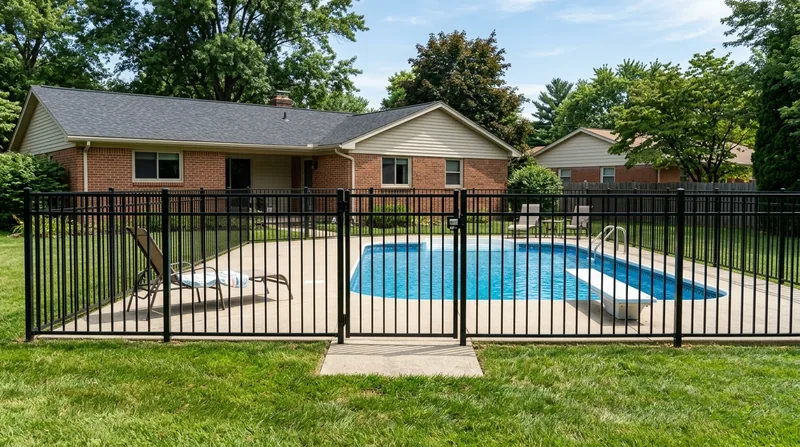




Pool fence installation in Columbus requires more than attractive pickets and posts. Your pool barrier must meet Ohio code and the specific requirements set by your local building authority, whether you live in Columbus proper, Upper Arlington, Bexley, or one of the surrounding communities. We install aluminum and vinyl pool fencing built to hold up through Ohio winters, set posts below the frost line, and ensure every gate closes and latches as the code demands. Since 2013, we have worked with Columbus homeowners to build barriers that keep children safe and pass inspection the first time.
Why Pool Fence Safety Matters in Columbus Neighborhoods
A pool is an asset and a liability. Ohio law requires every residential pool to be surrounded by a barrier that meets specific height, material, and gate-operation standards. Your local building department enforces those rules, and the barrier must pass inspection before the pool can operate legally. A self-closing pool gate that fails to latch, or a fence that sags below code height, puts your family at risk and invites citation from the authority having jurisdiction.
- Pool barriers in Ohio must meet minimum height requirements set by state and local code; we verify the exact standard that applies to your address.
- Every gate must be self-closing and self-latching, with hinges and hardware that function reliably year after year.
- Posts set in concrete and installed below the frost line resist heave and keep the fence standing true through freeze-thaw cycles.
- Aluminum and vinyl materials do not rot, warp, or splinter the way wood does when exposed to constant moisture at pool-side.
- We help you understand whether your existing fence can be upgraded with removable pool fence panels or whether a new barrier makes better sense.
Passing inspection protects your family and your homeowner's insurance standing. We install to code and document every detail so you can open your pool with confidence.
Key info: Columbus and many surrounding jurisdictions, including Worthington and Gahanna, require pool barrier permits and final inspection before the pool is used. Contact your local building department to confirm the rules for your address. We work from your existing survey and install on the line you identify.
For more information on how pool code compliance fits into your broader fencing project, see our aluminum and ornamental iron fencing page, which covers durable materials suitable for high-moisture environments.
How We Install Pool Fencing in Columbus: A Step-by-Step Process
Pool fence installation begins with a site visit to confirm code requirements, measure the perimeter, and identify obstacles such as utility lines, slopes, or existing structures. We then call 811 for utility locates, set posts below the frost line in concrete, and install the barrier material and gate hardware to meet or exceed the code standard for your jurisdiction. Every gate is tested for operation before we leave the site.
- We schedule a free estimate and walk your pool area to confirm the barrier height, material, and gate placement required by your local building code.
- We obtain and review your site survey or ask you to identify the fence line, and we call 811 for utility locates before any digging begins.
- We dig post holes below the frost line, set posts in concrete, and allow proper curing time before hanging rails or panels.
- We install aluminum pool fence or vinyl panels, ensuring all seams are sealed and no gaps exceed code limits.
- We hang and adjust the gate so it closes smoothly, latches securely, and remains self-closing under normal use.
- We test the entire barrier for stability, gate function, and compliance before scheduling your building department inspection.
This methodical approach ensures your barrier passes inspection and operates safely for years to come.
Example: A homeowner in Upper Arlington had an older wood fence surrounding the pool area, but the pickets had warped and several posts were soft at the base. Rather than salvage the wood, we removed it and installed a new vinyl pool fence with aluminum corner posts and a self-closing aluminum gate. The job took five working days and passed inspection on the first submission.
If you have questions about whether fence repair can extend the life of an existing barrier, we can assess that during your free estimate.
Pool Fence Materials: Aluminum vs. Vinyl vs. Mesh
The material you choose affects durability, appearance, maintenance, and long-term cost. Aluminum is lightweight, rust-resistant, and strong; vinyl is low-maintenance and does not require staining; mesh pool fence is removable and ideal if you want a temporary or flexible barrier. Each has trade-offs in terms of initial cost, lifespan, and code compliance in your specific jurisdiction.
| Material | Description | Best For |
|---|---|---|
| Aluminum | Lightweight, powder-coated finish, strong posts and rails, minimal maintenance, long service life. | Homeowners who want durability and low upkeep; fits most Columbus code requirements. |
| Vinyl (PVC) | Rigid panels, no staining or painting, resists moisture and UV, does not warp or splinter. | Families seeking a clean, modern look with minimal seasonal maintenance. |
| Removable Mesh | Temporary or seasonal barrier, easy to install and remove, lightweight, meets code when properly tensioned. | Seasonal pools or temporary barriers; verify code acceptance with your building department first. |
| Wood (Not Recommended) | Rots quickly at the base in pool environments; requires annual staining and sealing; pickets warp and splinter. | Not suitable for pool barriers due to moisture exposure and maintenance demands; replacement with aluminum or vinyl is the better long-term choice. |
Aluminum and vinyl both meet Ohio pool code and stand up to the freeze-thaw cycles that occur in the Columbus area. We recommend getting samples of each material during your estimate so you can see the finish and feel the quality before committing.
Pool Fence Installation Cost in Columbus: What to Expect
Pool fence cost depends on the perimeter you need to enclose, the material you choose, gate requirements, and site conditions such as slope or utility conflicts. Starting at $36 per linear foot, a typical residential pool barrier in Columbus ranges from $2,500 to $8,000 installed, with aluminum and vinyl at the higher end and mesh removable fencing at the lower end. Larger perimeters, multiple gates, or difficult terrain can increase the price, so we always provide a detailed estimate after measuring your site.
- Aluminum pool fencing typically costs more than vinyl but offers superior strength and a thinner visual profile if aesthetics matter to you.
- Vinyl barriers are mid-range in cost and require no staining, making them a popular choice for families who want low maintenance over time.
- Removable mesh fencing is the most affordable option but must be verified as code-compliant with your local building department.
- Gates with self-closing hardware add $800 to $1,500 per gate, depending on width and material.
- Utility conflicts, rock, or poor drainage can require additional post-setting work and will affect the final cost.
The best way to understand your actual cost is to request a free estimate. We measure your pool perimeter, confirm the code requirements for your address, and provide a detailed quote that breaks down material, labor, and any site-specific work. See our pricing page for more examples and to understand what factors move the price up or down.
Pool Fence Installation Near Me: What Columbus Homeowners Should Know Before Hiring
Choosing the right fence contractor matters. You want someone who knows the local code, carries proper insurance, can explain permit requirements, and stands behind the work with a warranty. Before you hire, verify that the contractor understands pool barrier rules in your specific city or township, because requirements vary across Greater Columbus, and an HOA or deed restriction may add further limits on height or material.
- Confirm that the contractor carries general liability and workers' compensation insurance; we offer a certificate of insurance on request.
- Ask whether the contractor will call 811 for utility locates before digging; it is required by law and protects you and the work crew.
- Verify that the contractor has read your local building department's pool fence code requirements and can explain them in plain language.
- Check whether your HOA or deed restrictions impose additional rules on fence height, material, or color; the contractor should review these with you before work begins.
- Get at least two or three estimates from different contractors so you can compare price, timeline, and material options.
- Ask for references from recent pool fence projects in your area, and follow up by calling at least one.
We have been installing fences in Columbus since 2013 and are an AFA Member Installer with the American Fence Association. We understand the permit process across the Greater Columbus area and take the time to explain what your pool barrier must meet. Call us at (380) 207-2032 for a free, no-obligation estimate, or contact us online to schedule a site visit.
Ohio issues no state license for fence installation. Fence contractor registration and permitting are set by individual municipalities, and requirements differ from city to city. Pool barrier code compliance is enforced by your local building department, and final inspection rests with the authority having jurisdiction. We are fully insured, and we can help document any damage to your existing fence for an insurance claim.
Pool Fence Installation in Columbus: Pricing Guide
| Service | Price | Details |
|---|---|---|
| Aluminum pool fence | Starting at $36/ft | Posts set below frost line in concrete, self-closing gate hardware included, powder-coated finish, minimal maintenance |
| Vinyl pool fence | Starting at $40/ft | Rigid PVC panels, no staining required, resists moisture and UV, self-closing gate hardware, long service life |
| Removable mesh pool fence | Starting at $18/ft | Temporary or seasonal barrier, easy installation and removal, verify code acceptance with your building department first |
| Self-closing gate with hardware | $800 to $1,500 each | Hinges, latch mechanism, and self-closing springs included; width and material affect final cost |
| Utility locate (811) and permit coordination | Included | We call 811 before digging and coordinate with your local building department to schedule inspection |
| Free estimate | No charge | Site visit, code review, material samples, and written quote within 24 hours; call (380) 207-2032 |
Indicative pricing, the exact cost depends on square footage, finish, and site access. Free personalized estimate within 24h at (380) 207-2032.


